Yes - installing commercial or residential window tint could save you up to 30% on cooling costs each year.
Commercial and residential window film is a great energy-saving solution, while providing a variety of other benefits like glare reduction, UV protection from fading, and privacy.
Yes! 3M cites that 3M Prestige Window Films can reject up to 78% of the sun's heat coming in through your windows.
3M estimates that 33% of cooling expenses stem from solar heat gain, and almost 40% of heat loss in commercial buildings is caused by windows. More heat blocked by window tint during the summer, and kept in during the winter, means less work for your HVAC systems — leading to lower bills.
Although the heat is blocked, that doesn't have to mean a dark space. Many window tinting options are available to provide savings without sacrificing natural light in your space.
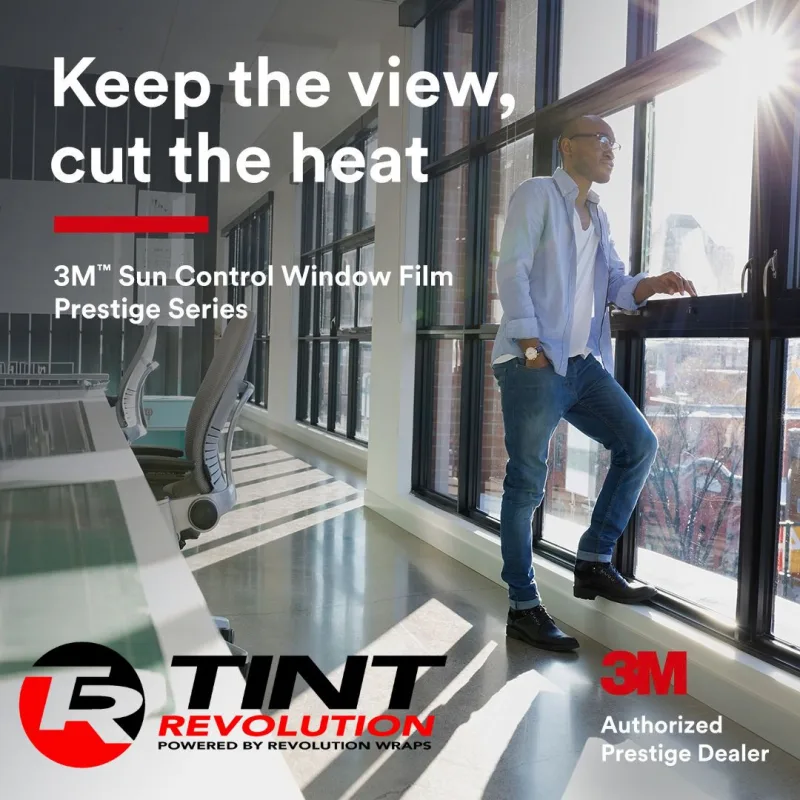
Energy-efficient window tint works by reflecting the solar heat and glare coming in through your windows from the sun, leading to less demand on your HVAC systems and lower energy bills.
These savings aren't exclusive to the summer months. Window film options are available that can help insulate your windows by reflecting and dispersing heat back into the room.
This means your HVAC systems don't have to work as hard to maintain a comfortable room temperature, resulting in lower energy bills.
3M, an industry leader, notes window films can lower cooling costs by up to 30%.
A case study was conducted by 3M for a bank in Arizona, where summer temperatures regularly reach 102 degrees or higher. The study found that with 3M Prestige Series Films installed on the windows of the bank, the bank was now saving more than $74,000 per year in electricity costs.
It's important to note that savings can depend on a variety of factors. Type of window film, location of the windows, number of windows, and climate can all play into the amount of energy savings received.
Ceramic films are on the higher end of cost but offer some of the highest heat rejection, while dyed films offer less heat rejection at a lower cost.
Here's a quick guide to some factors to consider when looking for an energy-saving window film:
| Film Type | Properties | Heat Rejection | Clarity | Durability | Price |
|---|---|---|---|---|---|
| Dyed | A layer of dye helps absorb solar energy | Low | Limited glare control; darkens glass appearance | Low to moderate (5–7+ years) |
$ Low |
| Metalized | Has metallic particles that reflect solar energy and UV rays *Note: can interfere with signal due to the conductive metal |
Moderate to high | Clear, but has a reflective appearance | Good (7–10+ years) |
$$ Mid-range |
| Ceramic | Uses non-metallic nano-ceramic particles to block infrared radiation without signal interference | High | Clear appearance without reflectivity or sacrificing natural light | Exceptional (10–15+ years) |
$$$ Top-tier |
On top of the savings, window tinting can provide additional benefits like increased privacy and security, glare reduction, and UV protection to keep your items from fading.
One of the first steps of the window tint process is determining your primary goals. Are you wanting to save energy? Want a security benefit? Wanting more privacy in the space without sacrificing the view and natural lighting? There is a variety of options to achieve these goals, so it's best to keep your priorities at the front of your mind when choosing an option.
If you will be installing window tint on commercial building windows, you'll want to be sure to consult with the building owner and professionals regarding local laws on the level of tint permitted.
It is extremely important that you consult a professional certified installer for the installation. Many product warranties may be voided if the window tint was not professionally installed. Window tint installation takes technique — and installing the film yourself can result in damaging the glass itself.
We know navigating all the different window tint options available can become overwhelming fast — but you don't have to do it alone. Our team has experience installing both commercial and residential window tint in the Nebraska area and is ready to help.
Our team of client service professionals and 3M Certified installers is here to work with you toward your goals, within a budget that makes sense for you.
Request a quote through our website today and get 5% off your project total when you complete your estimate and free consultation (while offer lasts). Let us help you get on the path to energy savings and make the most of your investment.
©Red Barn Media Group 2026
